

Inside BOMBU, Cabo Verde’s Living Archive of Sound, Memory, and Resistance
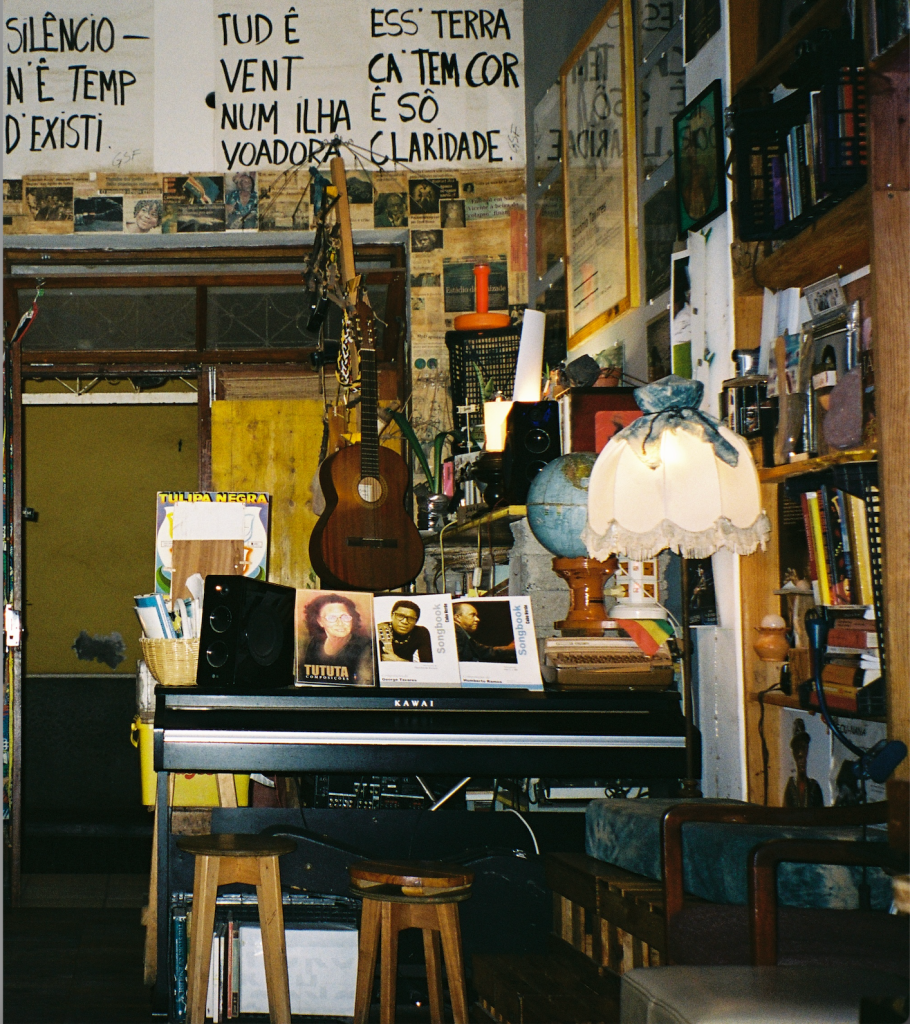
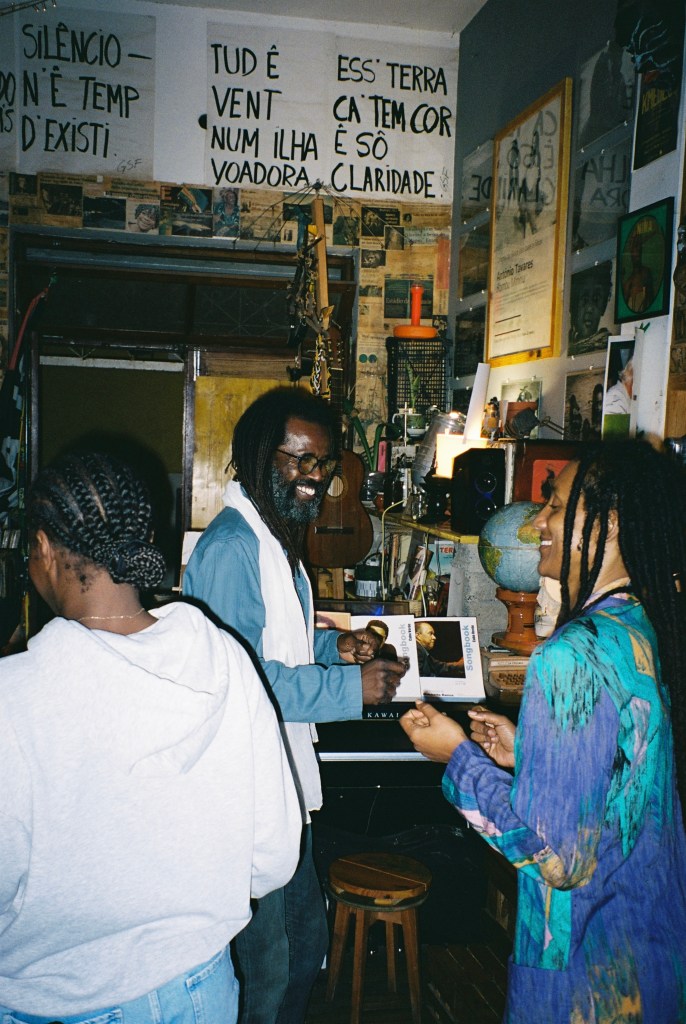
In the cobbled backstreets of Mindelo, Cabo Verde, a doorway opens to a place unlike any other: part memory vault, part creative sanctuary, part rebellion against cultural amnesia. Co-founded by artists and cultural visionaries António Tavares and Miriam Simas Tavares, Bombu operates as a dynamic blend of music archive, artistic lab, community gathering place, and grassroots educational hub. Together, they are weaving Cabo Verde’s past, present, and future into a living cultural fabric that resists commodification and refuses stagnation. With roots in local tradition and branches reaching across the diaspora, it challenges conventional ideas of heritage, ownership, and creativity.
We caught up with António, a cultural researcher and artist, who has shaped Bombu into what he describes as a “creative womb”—a living space where memory is continually reawakened through performance, dialogue, and experimentation. For him, Cabo Verdean identity is not fixed, but fluid and layered, shaped by migration, struggle, and sound.
A Musical Archive Born from Silence
To understand Bombu Mininu’s mission, one must first understand the cultural void it seeks to fill. For decades, Cabo Verdean music—rich in rhythm, shaped by migration, and sharpened by struggle—was at risk of erasure. Colonial rule imposed European aesthetics, while modern institutions neglected local archives. The result was not just the loss of sound, but the disintegration of identity narratives that had long been passed through generations by song.
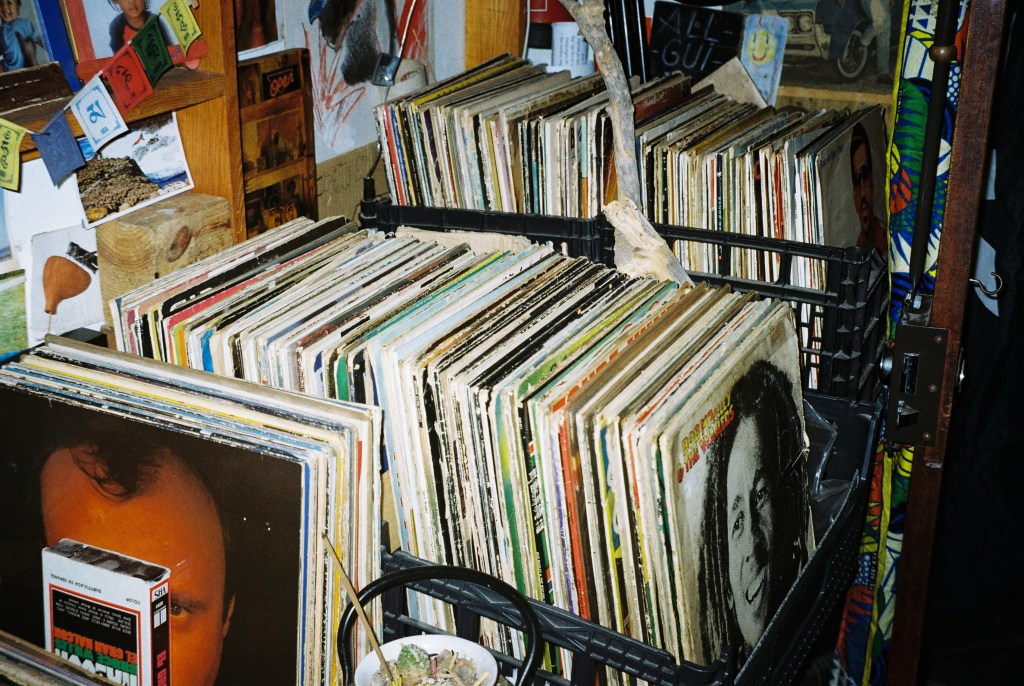
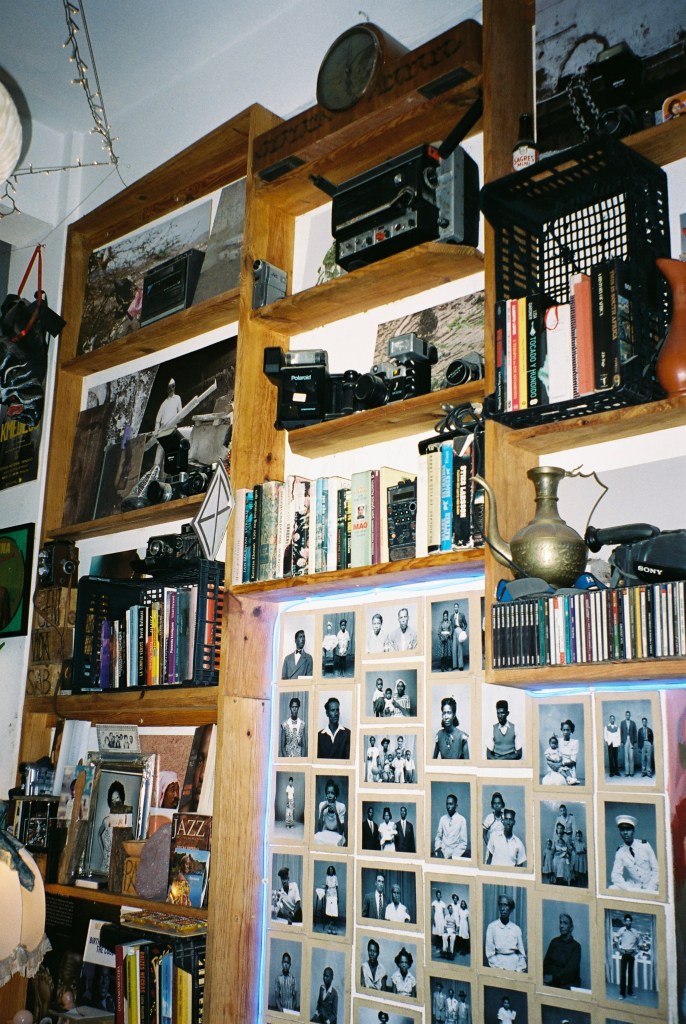
In response to this silence, Bombu emerged as both a sonic excavation and a form of resistance. Years of research, collecting, and community outreach resulted in an unparalleled collection of vinyl records, cassette tapes, sound reels, and audiovisual materials. Some were dug out of forgotten corners of local homes; others were salvaged from secondhand markets or shared by elders with stories still etched in their voices.
But Bombu is not content to preserve these artifacts behind glass. The collection forms the backbone of a living, breathing experience. Through workshops, listening sessions, and cultural gatherings, these recordings are reintroduced to the public in ways that invite interaction rather than observation. Community members are invited not just to listen but to reinterpret, respond, and remix.
Soon, Bombu reach will extend even further with the launch of Bombu Rádio, a community-powered broadcasting platform that will amplify the archive’s resonance across the islands and beyond. It’s not just about what is heard—it’s about who gets to speak.
Myth-Making and Musical Invention
Cabo Verde is a place where oral tradition holds as much authority as the written word. Stories passed from one generation to the next shape collective memory as much as—if not more than—historical documents. Among these are tales of shipwrecks that allegedly brought musical instruments to the islands, like the “keyboard boat” myth that suggests a sunken vessel delivered the seeds of electronic music.
These kinds of myths capture the imagination, but Bombu is more interested in uncovering the ingenuity that actually drove musical innovation. The truth is that Cabo Verdean musicians didn’t wait for miracles from the sea—they engineered their own revolutions with what was available. Broken tape decks became instruments. Ferrinhos and tchabetas—traditional metal and wood percussion tools—were fused with salvaged electronics to create new sonic textures.
It was creativity born from scarcity, not excess. And that, António suggests, is the real story worth telling. One of transformation, adaptation, and agency—a kind of sonic alchemy that turned limitation into legacy.
This ethos still shapes the workshops and experimental labs at Bombu today. Artists are encouraged to blur the lines between past and future, traditional and modern, analog and digital. Innovation isn’t viewed as a departure from tradition, but as its natural continuation.
Education Beyond the Classroom
Bombu resistance to traditional structures doesn’t stop at music. Its entire educational philosophy defies the classroom-as-usual model. Rather than leaning on external institutions or conforming to formalized curriculum, the project places its trust in collective knowledge, informal pedagogy, and lived experience.
António and Miriam have invested their energy into building Bombu CAP, a center for performing arts where movement, rhythm, and storytelling converge. Alongside it is Uniafro, a radical educational initiative reimagining the university through Afro-diasporic connection and knowledge exchange. Both projects draw from local wisdom while opening space for cross-cultural dialogue, challenging the top-down flow of traditional academia.
In these spaces, everyone is seen as both learner and contributor. A grandmother might teach a rhythm that predates recorded music; a young beatmaker might reinterpret it with a laptop. Knowledge is horizontal, participatory, and multigenerational. Learning becomes an act of cultural intimacy, not institutional hierarchy.
For Bombu, education is not about standardisation—it’s about transformation. It’s about creating spaces where culture is not explained, but felt and embodied.
Culture in Motion
Cabo Verde has always existed in flux. Its history is defined by circular migration, transatlantic currents, and cultural cross-pollination. Unsurprisingly, its music reflects this movement: genres like morna, coladeira, batuque, and funaná are all echoes of these journeys, each shaped by a specific geography, mood, and moment in time.
Today, a new wave of artists is reshaping this heritage. Traditional rhythms are being sampled into trap beats, funaná melodies are merging with techno, and local lyrics are flowing through global genres. Rather than resisting change, Bombu embraces it—seeing hybridity as proof of a culture that is alive and responsive, rather than nostalgic and static.
Vinyl remains a touchstone in this evolution. Though digital access has exploded, there’s still something irreplaceable about placing a needle on a record—an act of presence that connects listeners to emotion, ancestry, and memory. The crackle of the record becomes part of the storytelling.
António refuses to single out a favourite from the archive, not out of indecision, but principle. Each piece holds a distinct role in the unfolding of Cabo Verde’s cultural consciousness. Together, they chart a map of resistance, resilience, and reinvention.
Building the Future, Together
Bombu is not the work of two people—it’s a living network. Its form is shaped by every dancer who steps through the door, every musician who samples an old track, every elder who donates a forgotten tape, and every child who bangs out a rhythm for the first time.
Participation is the heartbeat of the space. Contributions come in all shapes: a borrowed amplifier, a shared lullaby, a story whispered between generations. This polyphonic model is central to Bombu vision. It doesn’t strive to “represent” Cabo Verdean culture; it invites everyone to create it.
In a time when culture is often flattened into brands or exported for mass consumption, Bombu offers a model of rooted creativity—one that celebrates complexity, contradiction, and co-creation.
It’s not just about saving history—it’s about shaping what comes next.
The Beat Goes On
Bombu is both anchor and launchpad. As it grows, it continues to draw on ancestral knowledge while opening portals to new artistic futures. With projects like Bombu Rádio, its reach will deepen, offering a channel for voices often excluded from dominant narratives. And through Bombu CAP and Uniafro, it will nurture the next generation of cultural thinkers, doers, and dreamers.
In many ways, Bombu is what happens when memory is not just preserved, but set free.
What began as a response to cultural loss has become a vibrant hub of resistance, regeneration, and radical imagination. Its work is a reminder that art does not exist in isolation—it moves, gathers, and speaks. It invites us in and asks us to listen. Not just to what was, but to what could be.


Photos by Yoan Sylva
 mutuals magazine