
A Night of Memory and Possibility: The Launch at UNESCO
On a spring evening at the end of April, beneath the soaring ceilings of UNESCO’s historic auditorium in Paris, Air Afrique Magazine: Issue 2 was officially launched to a grand and emotional reception. The moment carried the weight of memory and the shimmer of possibility. Artists, thinkers, diplomats of culture, and dreamers gathered in a space consecrated to global knowledge and cultural heritage—an ideal setting for a project rooted in transnational imagination.
To mark the occasion, Air Afrique hosted a full day of talks, screenings, and conversations. Inspired by the legacy of the venue itself, the program invited contributors from the magazine as well as thinkers from their ecosystem to share reflections, transmit knowledge, and spark dialogue. It was a gathering shaped by voices in motion, each one echoing the magazine’s commitment to cross-cultural exchange.
More than a magazine launch, it was a symbolic takeoff—an affirmation that African and Afro-diasporic narratives belong not only in archives, but in the skies. With a theme on “Voyage”, this issue charts new constellations of mobility, legacy, and futurism—setting the stage for stories that cross borders and generations.

Lamine Diaoune – Photo by Yoann Sylva
Who is Air Afrique ?
Air Afrique is a multidisciplinary cultural platform devoted to the arts, aesthetics, conversations, and knowledge from across the Afro-diaspora. Its name, spirit, and vision are inspired by the historic Pan-African airline Air Afrique (1961–2002).
Founded in 1961 by eleven Sub-Saharan African countries, Air Afrique was born from a vision of shared African identity and sovereignty. It was a co-owned airline created to connect the continent internally and to the world, embodying a new form of African modernity and unity—linking Dakar to Brazzaville, Freetown to Abidjan, Lomé to Cotonou, Douala, and Libreville. It was a circulatory system of a continent once partitioned and parsed by others. Throughout the 20th century, it served as a tool of African soft power—until its disappearance in 2002.
The story might have ended there but in 2021, a group of young visionaries in Paris revived it—not as a mode of transport, but a mode of transmission. Inspired by the memory of the defunct airline, they revived its legacy through a new cultural platform. Today’s Air Afrique is not about aviation, but imagination. It reclaims space for Afro-diasporic narratives in the fields of arts, aesthetics, memory, and conversation.

Jeremy Konko – Photo by Yoann Sylva
The creative minds behind Air Afrique approach the archive not as a place of nostalgia, but as a fertile ground—planting seeds that spark new dialogues and reposition African stories at the heart of global culture. Composed of archivists and artists, dreamers and documentarians, their mission is not to recreate the past, but to stretch it forward—to draw a line from the grounded histories of African mobility to the speculative possibilities of Black futures.
Leading this renaissance is Amandine Nana, Editor-in-Chief, alongside a team including Lamine Diaoune (Creative Director and Archives Manager), Jeremy Konko (Photo Editor and Photographer), Djibi Kebe (Creative Director), and Managing Editor Ahmadou-Bamba Thiam.
INSIDE ISSUE NO. 2
Themed around Voyage, Issue 2 is an invitation to consider mobility not only as the act of moving through space, but as a metaphysical condition—a state of becoming, remembering, and imagining.
Editor-in-Chief Amandine Nana offers a guiding refrain:
“Voyage is an ascension that gives rise to tales of mobility, human interconnections, cultural hybridisation and mythology.”
Here, voyage becomes a portal: a passage through time, memory, and collective dreaming. The magazine travels from Côte d’Ivoire to Bahia in Brazil, and Guadeloupe—geographies that are more than destinations; they are thresholds of Afro-diasporic history and cultural exchange. These places bear the echoes of forced migration and the resilience of return, rupture, and reinvention.
Through essays, interviews, photography, and archives, this issue explores how movement shapes identity—how wandering, exile, and artistic drift become powerful acts of storytelling. It asks: What do we carry with us when we move? And what do we leave behind?
Art, society, cinema, music, and memory become the coordinates on this map, each one a point of departure into broader questions of belonging, transformation, and the freedom to chart one’s own path.
Fatoumata Kebe: Astronomy and Ancestral Futures
A central constellation in Issue 2 is a luminous cover editorial on Fatoumata Kebe—captured by Jeremy Konko and styled by Lawrence Adu and team—the award-winning Senegalo-Malian astrophysicist whose presence in these pages bridges the ancestral and the astronomical.
Her work traces a profound continuity between the cosmologies of ancient African cultures and the frontiers of contemporary science. As she eloquently puts it:
“The stars have always been guides for our ancestors, not just tools of navigation, but also windows on our place in the universe.”
Kebe’s life journey is itself a voyage, marked by intellectual brilliance, quiet determination, and a refusal to be limited by the constraints of race, gender, or geography. Growing up in Seine-Saint-Denis, a working-class suburb of Paris often stigmatised in public discourse, she faced subtle and overt challenges navigating academic and professional spaces shaped by discrimination and exclusion. And yet, she ascended, earning a doctorate in celestial mechanics and becoming a voice for both scientific excellence and social equity.
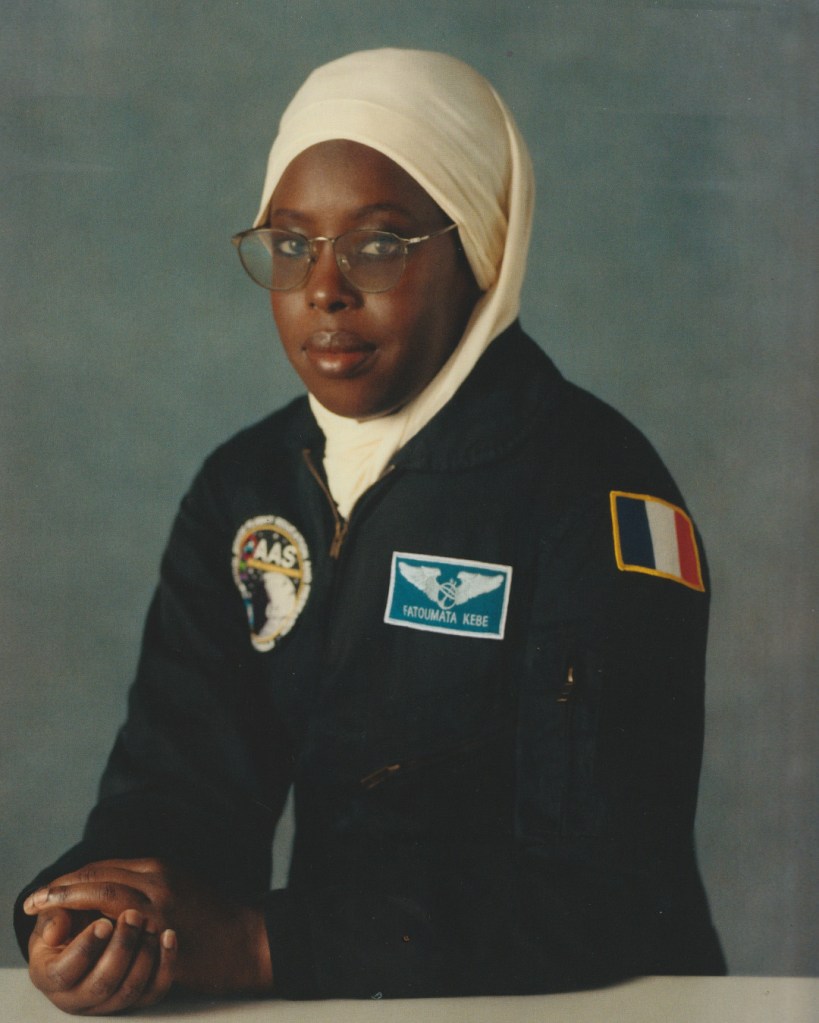
Fatoumata Kebe – Photo by Jeremy Konko
But Kebe’s impact extends far beyond academia. At the heart of her mission is the desire to democratise science—to make astronomy accessible, tangible, and resonant for young people, especially in underserved communities like her own. Through outreach and educational initiatives, she invites the next generation to look up, to wonder, and to imagine themselves among the stars.
Her editorial is also a tribute to African cosmologies—traditions that have long preserved detailed knowledge of the skies and ancestral tales that remind us stargazing is not new to Africa, but ancient. For Kebe, astronomy is more than science; it is a spiritual and cultural quest, an inheritance, and a vision of the future rooted in memory.
In her story, voyage is not only about distance traveled—but about possibility reclaimed. Her presence in this issue affirms that the cosmos is not the final frontier, but a familiar home—one our ancestors have always known.
This editorial deserves to be read, not only for its insight into Kebe’s research and passion, but for what it reminds us: that Africa has always looked to the stars—not in search of escape, but to better understand our place on Earth.
Explorations & Interviews
Woven throughout Issue 2 are vivid encounters—conversations spanning time zones and generations, tracing the echoes of movement and cultural exchange.
- A rare and reflective interview with Ferdinand Migan-Gandonou, former Financial Director of the original Air Afrique, offers a personal and economic portrait of a company that dared to connect the continent on its own terms. His memories chart soaring ambitions and complex realities, reflecting the spirit of cooperation and the quiet heartbreak of a dream interrupted.
- The issue revisits one of Africa’s most fascinating yet under-appreciated historical episodes: Zambia’s 1960s space program, initiated by Edward Makuka Nkoloso. Once dismissed as eccentric, it’s reconsidered as a radical post-independence act of imagination where the cosmos became a canvas for sovereignty and hope.
- In London, fashion designer Martine Rose opens dialogue on Jamaican music as cultural archive, memory, and resistance. She reflects on how sound shaped identity in diasporic London, and how music becomes a language of belonging across borders.
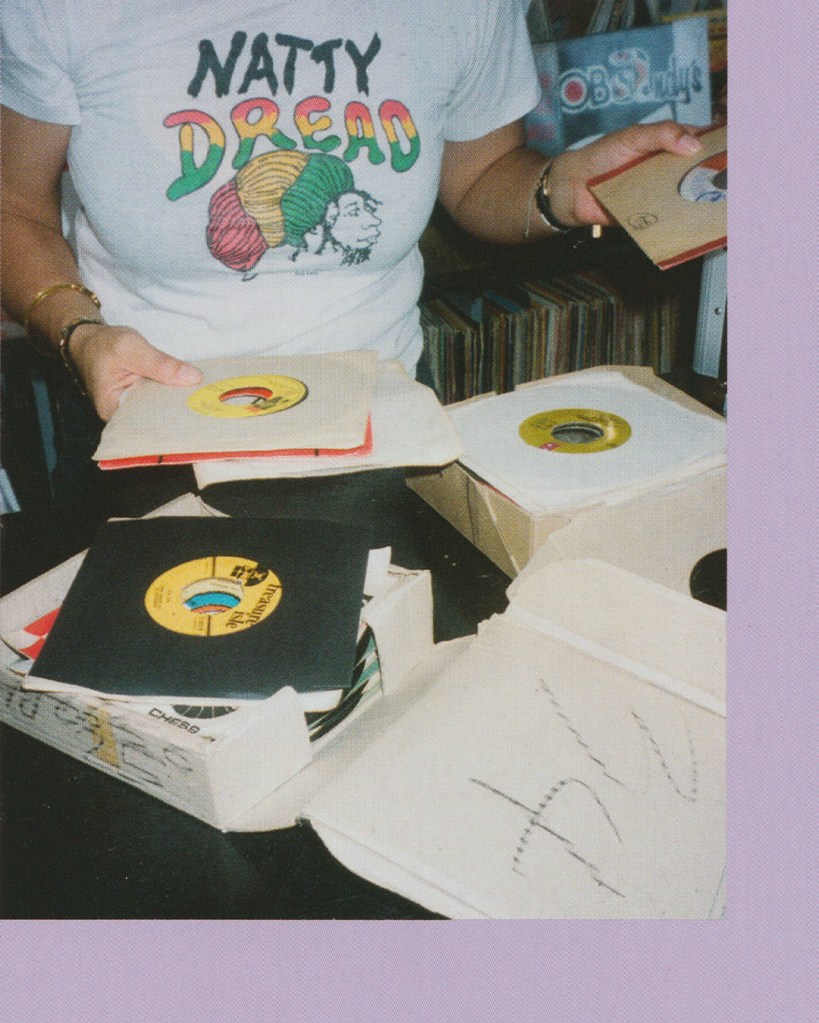
Photo in Air Afrique – Issue 2
- Pharrell Williams discusses dreams, music, travel, and the weight of archives, tracing the interconnectedness of Black creative expression across time and space.
- Gabon’s Ntcham music scene is featured—a movement vibrating with energy, protest, and joy, mapping musical geography of migration, resilience, and cultural reinvention.
Together, these conversations form a living cartography of voyage — not only charting routes people take but the meanings they carry. They testify to how culture moves, adapts, and endures, telling stories between departure and arrival.
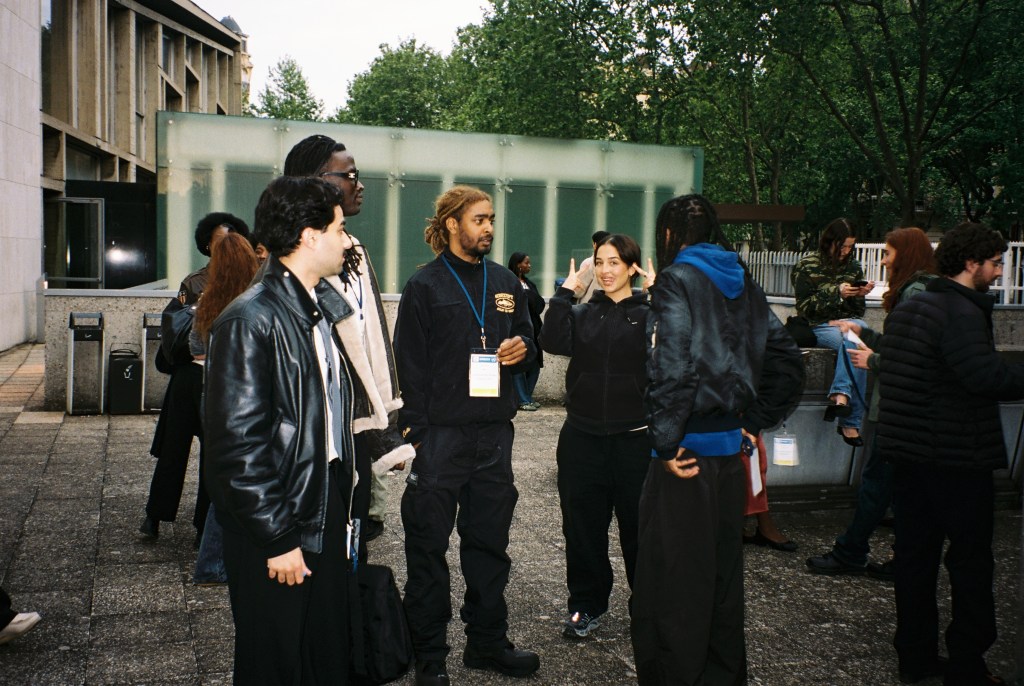
Photo by Yoann Sylva
A Living Archive
Through testimonies, essays, and visual storytelling, Issue 2 weaves a lineage between ancestral journeys and speculative futures. Each contribution is a thread in a rich tapestry of diaspora, desire, and defiance. This issue reimagines the magazine as a vessel of transmission—not merely of content, but of culture itself. It invites us to experience motion not only as physical travel but as transformation, connection, and continuity. Just as the original airline linked cities, Issue 2 bridges ideas, people, and stories across borders and generations. Air Afrique: Issue 2 emerges as a state of being, a way of seeing, remembering, and imagining. Within its pages, we are reminded that movement is both legacy and promise — a perpetual journey shaping identity, community, and possibility.
In doing so, Air Afrique stands as a powerful testament: through remembering and envisioning, we keep the spirit of motion alive, charting new paths for generations yet to come.
Find out more on Air Afrique here:
Magazine available HERE
 mutuals magazine